SEO is dead – an opinion piece by Nikolai Micallef
The short answer… No, SEO is not dead, but outdated tactics are in fact obsolete. Modern SEO focuses on capturing user intent, targeting middle and bottom of the funnel commercial keywords, and building genuine brand authority rather than chasing vanity rankings If your idea of SEO is a €1,000 a month agency package filled with…
If your idea of SEO is a €1,000 a month agency package filled with technical jargon and generic keyword garbage, then yes, SEO is dead. In reality, SEO is thriving! SEO nowadays is all about understanding user intent, and targeting middle and bottom of the funnel queries, while nurturing a brand profile just as you would nurture a delicate plant in a harsh climate. SEO remains critical for businesses.
Just like any other industry, SEO went through a lot of changes, but this is not because of AI alone. The SEO industry changed a lot over the past 12 years. Back in 2012, when I was still playing with my Pokémon cards and logging hours on RuneScape, a website could have dominated SEO by stuffing the main keywords on the homepage, and that’s it, you achieve top 3 results in a matter of days.
The SEO we have nowadays has since evolved to become a power-hungry monster, needing large amounts of data and clean information to properly understand what it is your website offers amongst the endless data (and garbage) that floods the web.
If SEO is evolving, why does everyone think that SEO is dying?
Now, I may be biased, or wrong, but this is how I see it…It is far simpler than people think. With the rise of AI, and zero-click user journeys (where users get their answers without actually clicking on a site), informational queries and top of the funnel opportunities are becoming meaningless. They no longer attract potential leads and customers to a website. Instead, SEO is now becoming how well you can target commercial and transactional keywords. Modern SEO is understanding the users’ intent, and ensuring that the web pages are satisfying these intents from start to finish.
In simple terms, in the past, SEOs had to jump through a couple of low hoops to rank at the top. Now, proper SEO requires you to jump through multiple flaming hoops while hanging ten storeys in the air. Same basic actions, but with more external factors playing a part and higher expectations. And that is how I perceive modern SEO.
Now pay attention to what I said… great SEO has become harder to do. But it is not impossible, and I can back this up with my own case studies to highlight this. The reality is that with the rise of ChatGPT, Claude and Gemini, low-level marketers and agencies are positioning themselves as SEO experts. This is resulting in businesses being cheated by people who claim they know SEO, but are stuck in the 2010s, doing SEO the old way, a way which no longer reaps results. A method of SEO that is now dead. Unfortunately, this is creating a bit of a trust issue, and it is pushing people to believe that SEO is not worth exploring and is a waste of money. This is wrong, but if you got scammed or had a negative experience with a so-called SEO expert, I would understand.!
Branches of SEO that died versus SEO tactics that are thriving
Here I have just a small list of what is considered dead, and what is thriving. I did not include AI content because this is a whole other Pandora’s box that I decided not to cover today. But yes, AI content has to be used with caution. In fact, pumping out AI written articles is successful for a few days, maybe weeks, but then the whole domain will get penalised by Google, so yeah, don’t. 😅
|
Outdated SEO tactics that are now dead |
Modern organic growth that is thriving |
What to take note of… |
|
Chasing vanity keyword rankings |
Tracking high-intent conversions & qualified leads |
This means that writing blog articles targeting information queries, such as “how to”, “what is”, etc. is not enough. Instead, the content has to provide actual value, backed by expertise. |
|
Buying low-quality backlinks |
Building real entity authority and customer trust |
Buying backlinks has always been frowned upon, but building links in a sustainable manner goes a long way. Having links coming from other platforms in your niche helps Google better understand what you offer. |
|
40-page PDF reports full of clutter |
Real-time, clear data dashboards showing actual revenue drivers |
SEO agencies love their reports. But reports can be filled with heavy jargon and meaningless data. It is best to have 1 or 2 main metrics that you can constantly measure for success. |
|
Faceless content farms |
Expert-led opinion pieces with first-hand experience (E-E-A-T) |
This stands for Expertise, Experience, Authority & Trustworthiness. All content pieces must follow these 4 rules. That way, your content ends up giving some sort of value to the readers. |
How I tackle SEO as a freelance SEO consultant
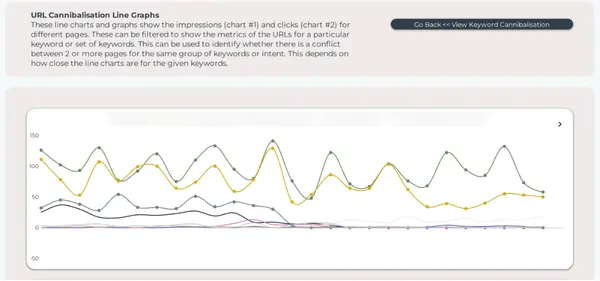
SEO Growth Hub is built on a number of principles that I genuinely believe in. Results over hype and measurable data over vanity metrics. That is why as a freelancer, I decided to put my skills together to build a dashboard that utilises data coming from Google Search Console, Google Analytics and a bit of Python.
This dashboard gets populated by data that is coming straight from your website, meaning you own that data and it is accurate. Tools like Ahrefs and Semrush are great, but their data is an estimate. With this dashboard, you get to witness what is working and what is not, by having what matters the most presented in a simple manner.
Is it perfect? No, it is not.
Is it customisable? Yes, the dashboard can be set up in 20 minutes, and can be tailored to specific needs, track specific key events and show the data that truly matters.
Through this dashboard, I can:
Do you want to cut through the noise?
If you are a business owner, who is serious about improving a site’s SEO, you just have to follow these steps:
These three steps are nothing but a guidance on how to start doing proper SEO. This is me speaking from experience. In fact, I find success often follows when I work for a number of months with the brand, rather than going for a short term goal. One of my most successful stories is the work I did with a local tennis club. We embarked on a year-long project. The numbers did not disappoint. We achieved a 170% increase in CTR and a 38% increase in event count – here is my success story with Tennis Club Kordin.
If you’re interested in working with a proper SEO consultant, I invite you to reach out or book a pressure-free meeting. I work with local businesses and tend to do better when the other side is willing to grow and learn. Here, explore my SEO partnership opportunities.
Ready? Set? Let’s rank! 💫